Natural Sweetener Swaps (Monk Fruit, Allulose, Honey & More)
The modern diet is awash in sweetness, a pervasive characteristic that, while undeniably pleasurable, poses a significant challenge for individuals aiming for sustainable weight management. Refined sugar, a ubiquitous ingredient in processed foods and beverages, offers fleeting satisfaction but carries a heavy metabolic cost. Fortunately, a growing understanding of sugar’s detrimental impact has spurred innovation, leading to a generation of natural sweeteners that can effectively curb cravings and support weight loss goals. This comprehensive guide will discuss the science behind sugar’s negative effects and introduce powerful natural allies—Monk fruit, allulose, dates, honey, and others—as healthier, more effective alternatives for your weight management journey. By understanding these natural sugar substitutes, you can make informed choices, retrain your palate, and embrace a sweeter, healthier lifestyle.
The Sweet Struggle: Why Choosing the Right Sweeteners Matters for Weight Loss
Navigating the complex world of sweeteners can be a bewildeling experience. While the human palate naturally gravitates towards sweet flavors, the way we satisfy that craving has profound implications for our overall health and our ability to achieve sustainable weight loss. The subtle differences between various sweetening options, from refined table sugar to cutting-edge natural alternatives, are paramount to successfully shedding body weight and maintaining a healthier metabolic profile. This section explores why this choice is so critical.
The Pervasive Problem of Sugar and Its Impact on Body Weight
Refined sugar, particularly when added liberally to processed foods and sugary drinks, stands as a primary culprit behind excess calorie intake. In many Western diets, daily sugar consumption regularly surpasses recommended guidelines. For instance, research indicates that for a staggering 90% of Americans, daily added-sugar intake consistently exceeds recommendations from sources like the Dietary Guidelines for Americans [source: Mather Hospital, 2021]. This overconsumption provides virtually no nutritional value, leading to its infamous label: “empty calories.” These readily contribute to weight gain, especially the accumulation of visceral fat, which is strongly linked to a cascade of serious health issues. The burgeoning Global Natural Sweeteners Market, valued at USD 22.48 billion in 2023 and projected to reach USD 59.80 billion by 2030, underscores a significant global shift away from traditional sugar consumption.
Beyond Empty Calories: How Sugar Affects Blood Sugar, Insulin, and Metabolism
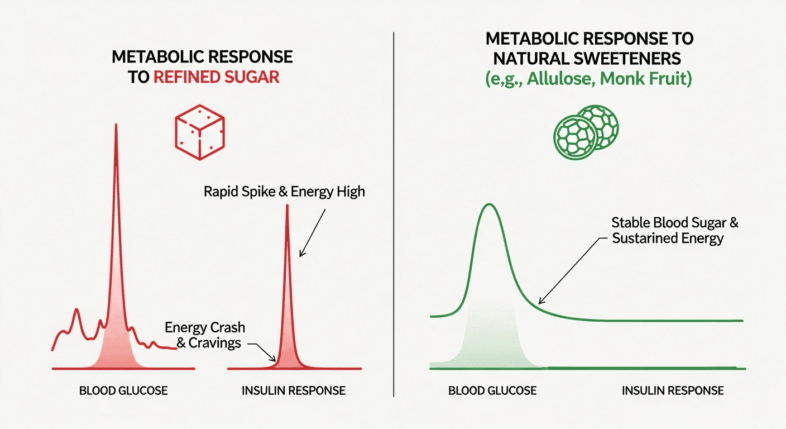
 The ‘sugar roller coaster’: Refined sugar causes a rapid spike and crash in blood sugar and insulin, while natural sweeteners like allulose and monk fruit have a minimal impact, promoting metabolic stability.
The impact of sugar extends far beyond its caloric load. Upon consumption, your body rapidly metabolizes sugar into glucose, precipitating a swift surge in blood sugar levels. This acute rise prompts the pancreas to release insulin, a vital hormone that facilitates the uptake of glucose from the bloodstream into your cells for energy. However, frequent and substantial spikes in blood sugar induced by high sugar intake can lead to insulin resistance. This condition occurs when your cells become less responsive to insulin’s signal. Over time, this chronic state can disrupt your metabolism, promote the storage of fat, and significantly increase the risk of developing type 2 diabetes. The perpetual cycle of blood sugar highs and subsequent crashes also contributes to debilitating energy slumps and heightened cravings, creating a challenging feedback loop that hinders weight management efforts. Understanding these intricate physiological responses is the first step toward making beneficial dietary shifts.
Introducing Your Allies: Monk Fruit, Allulose, and Dates in Your Weight Loss Journey
Fortunately, the landscape of available sweeteners is rapidly evolving. A new wave of natural sugar substitute options empowers consumers to enjoy sweetness without the detrimental metabolic consequences associated with refined sugar. These alternatives, often derived from fruits, plants, or naturally occurring compounds, provide a healthier pathway to satisfy sweet cravings while actively supporting weight loss objectives. Unlike traditional sugar, they offer unique advantages, including zero or minimal calories, a significantly lower impact on blood sugar levels, and even potential complementary health benefits. Exploring these allies is key to transforming your relationship with sweetness and achieving lasting success in your weight management endeavors.
Monk Fruit: The Zero-Calorie Elixir for Sustainable Weight Loss
Monk fruit, a small, round fruit indigenous to the lush landscapes of Southeast Asia, has rapidly ascended in popularity as an effective and beneficial natural sweetener. It is particularly lauded for its remarkable zero-calorie profile and its potent sweetness, offering consumers a clean, delightful flavor without the metabolic baggage commonly associated with sugar.
What is Monk Fruit? Origin and Sweetening Power (Monk fruit extract)
Monk fruit, scientifically recognized as Siraitia grosvenorii, boasts a rich history of use in traditional Chinese medicine. The intense sweetness derived from monk fruit extract originates from potent compounds known as mogrosides. These mogrosides are present in exceptionally high concentrations within the fruit, rendering them remarkably sweet – estimated to be between 100 to 250 times sweeter than conventional sucrose (table sugar). This means that only a minuscule amount is required to achieve the desired level of sweetness, making it an incredibly effective tool for substantially reducing overall calorie and carbohydrate intake. The growing global monk fruit sweetener market size, estimated at USD 353.7 million in 2023, highlights its significant and expanding adoption by health-conscious consumers worldwide [source: Grand View Research, 2024].
How Monk Fruit Supports Weight Loss:
The primary mechanism by which monk fruit aids weight loss is its complete absence of calories and carbohydrates. By substituting sugar with monk fruit, individuals effectively eliminate a considerable source of empty calories from their daily dietary intake without having to sacrifice the pleasure of sweetness. This reduction in caloric intake is fundamental to establishing the calorie deficit essential for losing body weight. Furthermore, because monk fruit does not significantly impact blood sugar levels or elicit a substantial insulin response, it helps prevent the energy crashes and subsequent intense cravings that are frequently triggered by sugar consumption. Emerging research also suggests that monk fruit extract possesses antioxidant properties, which may contribute to overall health and well-being during a weight loss journey.
Practical Uses and Flavor Profile:
Monk fruit extract is remarkably versatile and can be seamlessly integrated into a wide array of culinary applications. Its clean, subtly fruity flavor profile makes it an ideal sugar substitute for beverages such as coffee, tea, and smoothies. It is also suitable for use in baking, sauces, and dressings. Typically available in powdered or liquid forms, it’s important to note that monk fruit does not provide the bulk or contribute to browning in the same way as sugar. Therefore, recipes may require minor adjustments or blending with other ingredients to achieve the desired texture and appearance in baked goods.
Safety and Side Effects: A Natural Choice
Monk fruit extract holds the esteemed Generally Recognized As Safe (GRAS) status granted by the U.S. Food and Drug Administration (FDA). Extensive studies have not identified any adverse effects associated with its consumption. Crucially, unlike some artificial sweeteners, it is derived entirely from a natural source. While scientific research is ongoing, current evidence strongly suggests that monk fruit does not negatively impact gut health or critical metabolic markers. Its excellent safety profile solidifies its position as a reliable and beneficial natural sweetener for everyday use.
Allulose: The “Rare Sugar” Offering a Sweet Edge for Weight Loss
Allulose is an intriguing natural sugar that distinguishes itself significantly from traditional sugars due to its unique metabolic behavior. Often referred to as a “rare sugar” because it naturally occurs in very small quantities in certain fruits like figs and raisins, allulose offers a compelling sweetening option for individuals focused on weight management and maintaining stable blood sugar levels.
What is Allulose? Understanding this Unique Natural Sugar Substitute
Allulose is classified as a monosaccharide, a simple sugar, but its molecular structure possesses subtle differences compared to common sugars such as glucose and fructose. This critical structural variance means that the human body absorbs very little allulose in the small intestine. Consequently, it contributes only about 0.4 calories per gram, a fraction of the 4 calories per gram found in sucrose. This makes it an exceptionally low-calorie sweetener. The global allulose market size is substantial, estimated at USD 256.25 million in 2024 and projected for robust growth at an 8.9% CAGR, indicating its rapidly increasing appeal among consumers seeking healthier alternatives [source: Future Market Insights, 2024].
Allulose’s Mechanism for Weight Management:
Allulose’s unique absorption pathway is its paramount advantage for effective weight management. Because it is poorly absorbed by the body, it exerts minimal impact on blood sugar levels and the subsequent insulin response. This characteristic makes it an excellent sugar substitute for individuals managing diabetes or those striving to maintain stable blood glucose levels for consistent energy and reduced fat storage. By contributing negligibly to caloric intake and avoiding insulin spikes, allulose actively helps to mitigate the metabolic disruptions that frequently impede weight loss progress. Research has even indicated that allulose intake can lead to elevated levels of GLP-1, a hormone involved in glucose regulation and appetite control, further enhancing glucose tolerance and potentially reducing weight gain [source: PMC].
Practical Uses and Culinary Benefits:
Allulose offers a clean, sweet taste that is remarkably similar to sucrose, positioning it as an ideal ingredient for a wide spectrum of culinary applications. Notably, it bakes and browns much like sugar, imparting desirable caramelization and textures to baked goods that many other high-intensity sweeteners struggle to replicate. It dissolves effortlessly, making it perfect for sweetening beverages, yogurt, and other food items. Its exceptional culinary versatility allows for seamless integration into existing recipes, providing a guilt-free method to enjoy sweet flavors and satisfying baked treats.
Addressing Common Concerns: Safety Profile and Availability
Allulose is widely recognized as Generally Recognized As Safe (GRAS) by the U.S. Food and Drug Administration (FDA). While consuming very large quantities might lead to mild digestive discomfort in a small subset of individuals due to its rapid fermentation in the colon, moderate use is generally well-tolerated. Allulose is becoming increasingly accessible, available in major supermarkets and online retailers, often located in the baking or sweetener aisles, making it a convenient choice for consumers looking to reduce their sugar intake.
Dates: The Whole-Food Sweetener for Balanced Weight Loss
When considering natural methods to sweeten food and beverages, the humble date merits significant consideration. As a whole fruit, dates offer far more than just inherent sweetness; they provide a rich profile of essential nutrients and beneficial dietary fiber, positioning them as a powerful ally for a healthy diet and balanced weight loss strategy.
The Natural Goodness of Dates: A Fruit Packed with Nutrients
Dates are the fruit of the date palm tree and possess a natural, inherent sweetness. Unlike refined sugars, they retain their valuable natural fiber, vitamins, and minerals. A typical serving of dates contains a good amount of dietary fiber, along with important minerals such as potassium, magnesium, copper, and manganese. This fiber content is particularly crucial because it slows down the absorption of the natural sugars present in dates into the bloodstream. This process helps prevent sharp spikes in blood sugar levels and promotes a lasting feeling of fullness, which is highly beneficial for weight management. Furthermore, the inherent antioxidant properties found in dates contribute to overall health and well-being.
How Dates Contribute to Healthy Weight Management:
The dietary fiber present in dates plays a significant role in enhancing satiety, meaning you feel fuller for extended periods after consuming them. This increased feeling of fullness can effectively reduce overall calorie intake by curbing mid-meal snacking and diminishing the urge to overeat. While dates do contain natural sugars and contribute to caloric intake, their complex carbohydrate structure combined with their fiber content leads to a slower, more sustained release of energy compared to refined sugar. This balanced energy release is instrumental in preventing drastic fluctuations in blood sugar and insulin levels, thereby supporting a more stable metabolism and making them a healthier sweetening option when used judiciously.
Mindful Consumption: Maximizing Date Benefits for Weight Loss
Despite their numerous healthy attributes, moderation remains a key principle when incorporating dates into a weight loss plan. Because they are calorie-dense, consuming them in excessive quantities can inadvertently counteract weight loss efforts. It is therefore best to use them mindfully as a natural sweetener or as part of a balanced snack rather than consuming them freely. Understanding their nutrient density helps you appreciate their true value as a whole food and utilize them strategically within your dietary framework.
Practical Ways to Incorporate Dates into a Weight-Loss Diet:
Dates can be ingeniously incorporated into a variety of dishes. They can be pureed and used as a natural binder and sweetener in homemade energy balls, muffins, or cookies. Date paste serves as an excellent replacement for refined sugar in many baked goods, imparting moisture and a rich, caramel-like flavor. They can also be added to smoothies to provide natural sweetness and desirable thickness. Additionally, dates can be blended into sauces, or simply enjoyed on their own as a satisfying and nutrient-rich snack. Given that 73% of consumers express interest in ‘no added sugar claims’ when purchasing food and beverage products, dates present a truly natural and appealing solution [source: McCormick Flavor Solutions, 2025].
Sweetener Showdown: Choosing the Right Option for Your Weight Loss Goals
With a growing array of excellent natural sweetener options available, selecting the best one for your individual needs involves a clear understanding of their unique characteristics and benefits. Each option offers distinct advantages that can support your weight loss journey and contribute to overall health.
Monk Fruit vs. Allulose vs. Dates: A Quick Comparative Overview
- Monk Fruit: This natural sweetener offers intense sweetness with the significant advantage of zero calories and zero impact on blood sugar. It is an ideal choice for beverages and for overall calorie reduction. However, it does not provide the necessary bulk for traditional baking.
- Allulose: Allulose delivers a sugar-like taste and texture with very few calories and a minimal impact on blood glucose. It is an excellent choice for baking, caramelization, and serves as a direct sugar replacement in most foods and beverages, closely mimicking the culinary properties of sucrose.
- Dates: As a whole fruit, dates provide natural sweetness, significant fiber, and a wealth of nutrients. While they do contribute calories and natural sugars, their fiber content promotes satiety benefits. They are best used for adding moisture, flavor, and natural sweetness in moderation.
Tailoring Your Choice: Which Sweetener Aligns with Your Dietary Preferences and Weight Loss Strategy?
The optimal choice among these sweeteners often depends on your specific health goals and how you intend to utilize them in your diet. For maximum calorie reduction and precise blood sugar control, particularly in beverages, monk fruit stands out as an excellent option. If your objective is to find a sugar substitute that closely mimics sugar’s behavior in baking, provides a similar taste profile, and offers minimal calories and blood glucose impact, allulose emerges as a top contender. For those seeking a nutrient-dense, whole-food option that adds fiber and natural sweetness to recipes or snacks, dates are unparalleled. Many individuals find success by employing a combination of these sweeteners to cater to a variety of culinary needs and dietary objectives, creating a versatile approach to managing sweetness.
Strategic Sweet Swaps: Actionable Steps for Weight Loss
Making informed and strategic choices about the sweeteners you use can be a remarkably powerful lever in your weight loss journey. These simple yet impactful swaps can significantly reduce your intake of detrimental added sugars and provide crucial support as you progress towards achieving a healthier body weight.
Your Everyday Sweetener Swap Cheat Sheet:
- Beverages: Effortlessly replace sugar in your morning coffee, afternoon tea, or other favorite drinks with monk fruit or allulose. For smoothies, consider using a small amount of date paste for natural sweetness and thickness.
- Baking: For cakes, cookies, and muffins, substitute sugar with a well-balanced blend of allulose and monk fruit. Date paste can also serve as a natural sweetener and effective binder in healthier baked goods like energy bars and brownies.
- Yogurt & Oatmeal: Sweeten plain yogurt or your morning oatmeal using just a few drops of monk fruit liquid, a sprinkle of allulose, or a small dollop of pureed dates for a touch of natural sweetness.
- Sauces & Dressings: Reduce or completely eliminate added sugar in homemade salad dressings, marinades, and savory sauces by opting for monk fruit or allulose to achieve the desired flavor balance.
The Art of Mindful Sweetening:
Beyond the simple act of ingredient substitution, it is profoundly important to cultivate mindful sweetening habits. As you gradually reduce your reliance on refined sugar and embrace natural alternatives, your palate will naturally adjust. You may discover that you require less sweetness overall to feel satisfied and content. Appreciating the subtle, nuanced flavors of fruits, spices, and other natural ingredients can lead to a more balanced, varied, and enjoyable relationship with food. This shift in perception is a vital, often overlooked, component of achieving sustainable weight loss.
Beyond Sweeteners: A Holistic Framework for Sustainable Weight Loss
While natural sweeteners serve as invaluable tools for reducing sugar intake and actively supporting weight loss, their true efficacy is amplified when integrated into a broader, holistic approach to health and wellness. Their power lies not in isolation, but as part of a comprehensive strategy.
The Importance of a Balanced, Nutrient-Rich Diet
Prioritize consuming a diet rich in whole, unprocessed foods. This includes lean proteins, healthy fats, an abundance of fruits and vegetables, and complex carbohydrates from sources like whole grains. Such a dietary pattern ensures you receive the essential vitamins, minerals, and fiber crucial for satiety, optimal metabolism, and overall well-being. A diet centered on nutrient-dense foods naturally helps manage cravings and supports a healthy body weight. For example, incorporating whole wheat flour in your baking or choosing whole grains for your meals provides sustained energy and essential nutrients that support your weight management goals.
Hydration, Physical Activity, and Stress Management (Stress Eating)
Adequate hydration is fundamental for metabolic processes and can effectively help manage hunger signals. Regular physical activity is essential not only for burning calories but also for building lean muscle mass and improving insulin sensitivity. Furthermore, effective stress management is critical; chronic stress can elevate cortisol levels, a hormone that often triggers stress eating, frequently leading to the consumption of sugary and ultra-processed foods. Incorporating stress-management techniques such as mindfulness, yoga, or simply spending time in nature can significantly bolster your weight loss efforts. Even mindful movement, like somatic workouts, can contribute to overall well-being and stress reduction.
Listening to Your Body: Cravings, Satiety, and Sustainable Habits
Cultivate a deeper connection with your body by paying close attention to its signals. Learn to differentiate between genuine hunger and emotional cravings. By choosing nutrient-rich foods and employing natural sweeteners mindfully, you can enhance feelings of satiety and significantly reduce the likelihood of overeating. Building sustainable habits, rather than relying on quick fixes, is the true cornerstone of long-term weight loss success. This encompasses developing a healthier, more balanced relationship with sweetness and learning to appreciate the diverse flavors and textures that a well-rounded diet offers, from dark green vegetables like Brussels sprouts to a variety of leafy greens.
The journey toward sustainable weight loss often hinges on making smarter choices about what we consume, and the type of sweetener we use is a critical factor in this equation. Refined sugar, with its detrimental effects on blood sugar, metabolism, and body weight, presents a significant hurdle for many. However, the advent and increasing accessibility of natural sugar substitute options like Monk fruit, allulose, dates, and honey offer a compelling and effective solution. These natural alternatives provide the desired sweetness without the adverse metabolic backlash, actively supporting calorie reduction, stable blood sugar levels, and fostering a healthier relationship with food. By strategically swapping out refined sugars for these intelligent product choices, incorporating them mindfully into your diet, and integrating these practices within a holistic framework of balanced nutrition, regular physical activity, and effective stress management, you can pave the way for lasting weight management success and a significantly improved sense of overall well-being.